
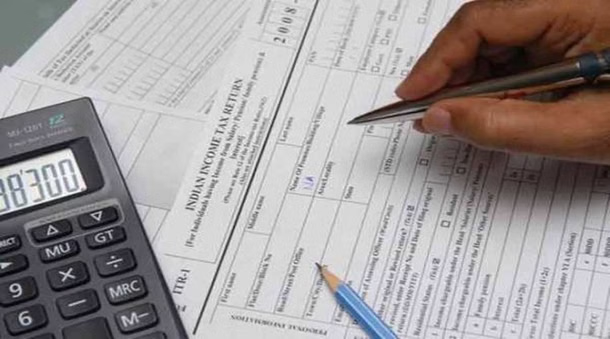

Filing an income tax return can feel like a once-a-year administrative task, but the information reported on that return can have a much wider impact on your finances. A missing income slip, incorrectly entered amount, overlooked deduction or late filing can create problems that may not become obvious until weeks or months later.
An accurate personal tax return helps ensure that your income is properly reported, eligible deductions and credits are considered and any amount you owe or expect to receive is calculated using the information available for your situation.
Accuracy also matters because your tax return can affect more than your refund. Filing can influence certain government benefits and credits, future tax planning, CRA correspondence and the financial records you may rely on when applying for financing or making major financial decisions.
For individuals in Calgary and across Canada, taking the time to prepare a complete return can reduce unnecessary complications and make tax season much easier to manage.
What Does Accurate Personal Tax Return Filing Actually Mean?
An accurate tax return is not simply one that is submitted before the deadline. It should also provide a complete and reasonable picture of your income, deductions, credits and other relevant tax information for the year.
That generally means checking information such as:
- Employment and other taxable income
- Investment in income
- Pension or retirement income
- Self-employment income
- Rental income, when applicable
- RRSP contributions
- Eligible employment expenses
- Tuition-related information
- Medical expenses when eligible
- Charitable donations
- Childcare expenses where applicable
- Other deductions or credits relevant to your circumstances
Accuracy also involves making sure information such as your marital status, address, direct-deposit details and other personal information is current where required.
A return can be filed electronically and still contain mistakes. Technology can help with calculations, but taxpayers remain responsible for ensuring that the information reported reflects their actual situation.
Why Can Filing Your Personal Tax Return Late Become Expensive?
One of the most immediate reasons to file accurately and on time is the possibility of penalties and interest when tax is owed.
For the 2025 tax year, most Canadian individuals were required to file by April 30, 2026. Individuals who were self-employed, or whose spouse or common-law partner was self-employed, generally had until June 15, 2026 to file. However, any 2025 balance owing was still generally due by April 30, 2026.
Deadlines should always be checked for the particular tax year because rules and calendar dates can change.
Late Filing and Late Payment Are Not the Same Thing
People sometimes assume that there is little reason to file if they cannot immediately pay the amount they owe. That can make the situation worse.
The CRA specifically advises taxpayers to file on time even when they cannot pay the full balance by the filing deadline. Filing can help avoid a late-filing penalty even though interest may still apply to an unpaid balance.
For a first late-filing situation involving a balance owing for the 2025 tax year, the CRA states that the late-filing penalty is generally:
- 5% of the balance owing, plus
- An additional 1% of the unpaid balance for every full month the return remains late, up to a maximum of 12 months.
A higher penalty can apply in certain repeated late-filing situations.
The CRA can also charge daily compound interest on an outstanding balance beginning after the payment due date.
This is why ignoring a tax return because you expect to owe money is rarely a useful strategy. Knowing the actual amount gives you a clearer starting point for addressing the balance.
How Can Inaccurate Filing Cause Tax Refund Delays?
Many taxpayers focus primarily on how quickly they will receive their refund. However, the speed of filing should never come at the expense of accuracy.
Submitting a return before gathering all necessary tax information can lead to missing income or incomplete claims. That may require corrections later and could create additional correspondence with the CRA.
Missing Information Can Create Additional Review
For example, suppose you have employment income from two employers but accidentally include only one T4. Your return may initially produce a different result than it would if all income were included.
Similarly, if a deduction or credit is claimed without sufficient supporting information, the CRA may ask for documents before accepting the claim.
This does not mean every correction will cause a serious problem. Tax returns can be adjusted when necessary. The goal, however, should be to submit the most complete information reasonably available the first time.
Most common tax slips are generally issued by the end of February, although certain slips, including some T3 and T5013 slips, may arrive later. The CRA also provides options for obtaining copies of certain missing slips through My Account after the issuer has submitted them.
Can Late Filing Affect Government Benefits and Credits?
Yes. Even individuals who expect little or no tax owing may still have an important reason to file.
The CRA notes that filing late can delay benefit and credit payments. Depending on eligibility, these can include payments such as the GST/HST credit, Canada Child Benefit and related provincial or territorial payments.
This is an important distinction.
A person may think:
“I don’t owe tax, so filing a few months late won’t matter.”
But their tax return may be used to determine or continue certain income-tested benefits.
For families and individuals who rely on those payments as part of their household cash flow, a delayed return can therefore create a financial inconvenience even when no late-filing penalty applies.
What Unexpected Tax Problems Can Filing Errors Create?
Some tax problems are immediately obvious. Others appear later when the CRA reviews information, receives additional tax slips or requests supporting documentation.
Understanding where problems commonly start can make them easier to prevent.
- Overlooking Additional Sources of Income
Employment income may be straightforward, but taxpayers can have other sources of income during the same year.
Examples may include:
- Multiple jobs
- Contract or freelance income
- Investment income
- Rental income
- Pension income
- Certain foreign income
- Business or professional income
- Taxable benefits
A common mistake is assuming that income does not need to be reported simply because no traditional employment slip was received.
Keeping a yearly record of income sources can make preparation considerably easier.
- Claiming a Deduction Without Proper Records
A deduction or credit should not be claimed simply because it sounds relevant.
Eligibility rules can depend on the type of expense, the taxpayer’s circumstances, supporting receipts, limits, and other requirements.
Before claiming an amount, ask:
- Does this expense qualify?
- Does it apply to this tax year?
- Do I have adequate documentation?
- Is only part of the expense eligible?
- Has the amount already been claimed elsewhere?
Maintaining organized records can save significant time if additional information is requested later.
- Entering Numbers Into the Wrong Category
Two tax slips can contain similar-looking figures that receive different tax treatment.
This becomes more common when a taxpayer has investments, self-employment activities, rental property, several employers or significant changes during the year.
A small data-entry mistake may change taxable income, deductions, or credits.
- Overlooking Major Life Changes
Tax situations often change when personal circumstances change.
Events that may affect a tax return include:
- Marriage or common-law status changes
- Separation or divorce
- Having a child
- Buying or selling property
- Starting a business
- Becoming self-employed
- Moving for work
- Beginning post-secondary education
- Retiring
- Receiving investment or rental income
When preparing a return, it helps to review the entire year rather than simply repeating the information used on the previous year’s return.
Why Is Recordkeeping Important Before Tax Season Begins?
Better tax filing often starts months before the return is actually prepared.
If documents are scattered between emails, drawers, online accounts, and financial institutions, it becomes easier to overlook something.
A simple annual tax folder can include relevant slips, receipts, donation records, RRSP documentation, investment information, childcare records and other supporting documents that apply to your situation.
Digital folders can work equally well.
The important point is consistency.
A Simple Personal Tax Preparation Checklist
Before preparing your personal tax return, consider reviewing:
- Previous-year Notice of Assessment: This may contain important carry-forward information or CRA adjustments.
- Income slips: Check that all employers, financial institutions, pension providers and other income sources are represented.
- Deduction records: Gather receipts and documentation relevant to deductions you plan to claim.
- Credit documentation: Review medical, tuition, charitable donation and other applicable records.
- Investment activity: Confirm whether you sold investments or received investment income during the year.
- Self-employment records: Organize business income and eligible business expenses if applicable.
- Rental property records: Collect rental income and expense documentation where relevant.
- Major life changes: Note changes that could affect your tax position.
- CRA correspondence: Review notices or requests you received during the year.
- Personal details: Confirm that relevant contact and status information is current.
A checklist reduces reliance on memory and makes it easier to identify missing information before filing.
When Does a Personal Tax Return Become More Complicated?
Not everyone needs the same level of tax assistance.
A taxpayer with a single T4 and few additional claims may have a relatively straightforward filing situation. Another person may have several income sources, investments, property, self-employment activity or changes in family circumstances.
Professional support can be worth considering when you have:
- Self-employment or freelance income
- Rental property income
- Multiple investment accounts
- Capital gains or losses
- Several employment sources
- Previous unfiled tax returns
- CRA correspondence you do not understand
- Significant changes from the previous year
- Questions about eligible deductions or credits
- Difficulty determining which documents are required
People searching for a tax return service near me should look beyond convenience alone. Consider whether the provider explains the filing process clearly, asks questions about changes in your situation, protects sensitive financial information and gives you an opportunity to review your return before it is submitted.
What Should Calgary Taxpayers Consider When Getting Filing Help?
Someone looking for help with a personal tax return Calgary service should ideally choose support that fits the complexity of their financial situation rather than simply choosing the quickest filing option.
A good tax-preparation conversation should address more than entering numbers from slips. It may include identifying changes from the prior year, checking whether information is missing, discussing unusual transactions and explaining important aspects of the completed return.
Brownboys Accounting provides personal tax preparation alongside tax planning, bookkeeping, accounting, payroll, and other financial services for clients in Calgary. The firm’s personal tax service is designed to help individuals organize their filing information and understand their tax position.
What Can You Do If You Discover a Mistake After Filing?
Finding an error after submitting your return does not automatically mean you are facing a serious tax problem.
The first step is usually to determine exactly what information was incorrect or omitted.
For example, you may discover:
- A missing income slip
- An incorrect income amount
- A forgotten deduction
- An eligible credit that was not claimed
- Incorrect personal information
- An investment transaction that was missed
Taxpayers can request changes to previously filed returns using CRA adjustment procedures when eligible. It is generally better to correct an identified error than to leave inaccurate information unresolved.
Keep copies of the documents supporting the correction and review the resulting reassessment carefully.
If you receive CRA correspondence regarding the issue, read the requested information and response deadline before taking action.
How Can You Make Next Year’s Tax Return Easier?
Tax preparation becomes much less stressful when it is treated as an ongoing recordkeeping process rather than an annual emergency.
A few habits can help:
Save Documents as You Receive Them
Create one folder for the tax year and place receipts, slips and supporting documents there immediately.
Review Your Finances During the Year
If your income changes significantly, you become self-employed, purchase a rental property or make a major investment transaction, consider the tax implications before year-end rather than discovering them at filing time.
Review Your Notice of Assessment
Your Notice of Assessment should not simply be filed away. Review it for changes, balances, carry-forward information and other details relevant to future returns.
Keep Personal and Business Records Separate
For self-employed taxpayers, mixing personal and business transactions makes bookkeeping and tax preparation more difficult.
Separate records make it easier to identify income and potentially deductible business expenses.
Ask Questions Before a Deadline
If you are uncertain whether an amount must be reported or whether documentation will be required for a claim, getting clarification before filing can prevent unnecessary corrections afterward.
For taxpayers who want assistance reviewing documents, filing their return or understanding how changes in their finances may affect taxes, Brownboys Accounting can provide professional tax support without turning the process into unnecessary complexity.
Frequently Asked Questions About personal tax return
Q. What happens if I file my personal tax return late but do not owe money?
The CRA generally does not charge the standard late-filing penalty when there is no balance owing. However, filing late can still delay refunds and certain benefits or credit payments.
Q. Should I file my tax return if I cannot afford to pay the balance?
Yes. The CRA advises taxpayers to file by the applicable deadline even when they cannot immediately pay the full balance. This can help avoid a late-filing penalty, although interest may still apply to unpaid amounts.
Q. What documents should I gather before filing my taxes?
Your documents depend on your situation but may include T4s and other income slips, RRSP receipts, investment records, tuition information, eligible medical and donation receipts, self-employment records and your previous Notice of Assessment.
Q. Can I correct my tax return after it has already been filed?
Yes. If you discover an error or omission after filing, you may be able to request an adjustment through the CRA. Keep supporting records and wait until the original return has been assessed before following the applicable correction process.
Q. When should I consider using a professional tax preparer?
Professional help may be useful when your return includes self-employment, rental income, investments, capital transactions, multiple income sources, previous filing issues or tax matters you are unsure how to report.